Showing posts with label classics. Show all posts

Friday, October 30, 2015

an unexpectedly thought-provoking halloween read

CarmillaCarmilla by Joseph Sheridan Le Fanu
My rating: 4 of 5 stars

"Girls are caterpillars while they live in the world, to be finally butterflies when the summer comes; but in the meantime they are grubs and larvae, don't you see - each with their peculiar propensities, necessities and structure."

This year, for the first time since I was in elementary school, I wanted to read something "spooky" during the fall. But I didn't feel emotionally up to the task of reading a full-fledged horror novel, so I instead picked up this little 1872 vampire story. It was just the right amount of creepy, with a surprising amount of depth: a melancholy contemplation of how society regards girlhood, with overtones of unease about humanity's position in the world. To a modern reader, the major plot "twist" is unsurprising, but there is a certain enjoyment in imagining what it was like to read this when it was first published - over two decades before Dracula, when the vampire genre was less ubiquitous. The writing remains engrossing and often quietly horrifying, my favorite chilling scene being one that seems to describe sleep paralysis. Even if you've read other vampire books, as most of us have, there are still surprises to be seen in the way this story unfolds.

What I found fascinating about the eponymous vampire is how seamlessly she fits into the world around her, as though she's a puzzle piece that was bound to materialize, or an organism that evolved to occupy a niche in an ecosystem. Repeatedly, we see how men assess and value female characters based on their appearance. Thus, Carmilla's beauty speeds her acceptance into people's homes. We see girls living in sheltered idleness, lonely without good friends their age, and often without mothers - a vacuum where matriarchy would have been. As a result they're overjoyed, perhaps a little blindly, at the opportunity of having a female companion. Given that Carmilla is a carnivore who has to feed off humans, is it any surprise that she learned to take advantage of these situations? We watch as she participates in a masquerade ball, playing the part assigned to her while subverting the whole ritual to achieve her own ends.

One of the most affecting and (initially) cryptic passages is when Carmilla argues for her right to exist as a natural creature. These arguments fall on the uncomprehending ears of other characters: "All things proceed from Nature, don't they? All things in the heaven, in the earth, and under the earth, act and live as Nature ordains? I think so."

On the subject of nature, I happened to be reading this at the same time as Jane Goodall's Through a Window: My Thirty Years with the Chimpanzees of Gombe, which is all about another type of near-human creature. Both books explore the discomfort that people can experience upon seeing that humanity might not be as separate or supreme as they thought. Evolution was an idea that was still relatively new at the time that Carmilla was written, and debates between scientific and religious explanations appear a few times in the story.

What makes this book so sad and mysterious, and so hard to stop thinking about, is that Carmilla never really feels like a villain. Even when we learn the truth about what she's done, it is hard to feel vengeful towards her. Over the course of the story she's appeared to be both affectionate and selfish, young and ancient, fragile and dangerous. It's mesmerizing, and it's hard not to share her would-be victims' desire to have her around for longer.

PS, this book can be acquired for free at Project Gutenberg, and I just learend that an audiobook version featuring David Tennant came out a few days ago. :)


View all my reviews

Sunday, August 16, 2015

He tried to say his prayers, but all he could remember were his multiplication tables.

The Snow QueenThe Snow Queen by Hans Christian Andersen


The Snow Queen seems to occupy an unusual position in the pantheon of fairy tales. It doesn't quite have the ubiquity and instant familiarity of Cinderella, Beauty and the Beast, or The Ugly Duckling. If you ask someone to summarize the plot for you, they might have only a vague idea. At the same time, the story has stayed very much alive - CS Lewis's The Lion, the Witch, and the Wardrobe, Disney's Frozen, and other fictional works (like this boardgame I just got) all show the influence of the fairytale's themes and imagery.

The childhood friends Kai and Gerda are torn apart when splinters from an enchanted mirror fall into Kai's heart, making it hard and cold, and his eyes, making him see the worst of everything. Kai vanishes in pursuit of a mysterious Snow Queen and Gerda sets out to find him. Her adventures are told over the course of seven stories within the fairytale (and some of those stories have other fairytales nested within them - everyone in here has their own tale to tell). Gerda's position is difficult because she doesn't have the benefit of a fairy godmother, and she's also not really being pit against a villain. The person that she's working against, Kai, is also the person that she's trying to help.

I think the story captured beautifully something that most people have been through or seen at some point - the process of becoming jaded and calculating, and chasing worldly ephemera instead of cherishing the goodness close at hand. But the story shows that it's not an irreversible journey, even if it takes some effort to see things clearly again. Also, I loved how Gerda found her way through the world using both empathy and self-reliance - she's her own hero, and she doesn't rely on a prince to shape her story for her.

"Cannot you give this little maiden something which will make her as strong as twelve men, to overcome the Snow Queen?”

“The Power of twelve men!” said the Finnish woman; “that would be of very little use.”


View all my reviews

Wednesday, July 22, 2015

If the generous ideas of youth are too often overclouded by the sordid views of after-life, that scarcely proves them to be false.

The Tenant of Wildfell Hall (Modern Library)The Tenant of Wildfell Hall by Anne Brontë
My rating: 4 of 5 stars

I've always been curious about Anne Brontë.


[Credit: Hark, a Vagrant!]

I was uncontainably exasperated with Wuthering Heights when I read it for a high school English class. A few years later, I was pleasantly surprised by Jane Eyre, although it's one of those rare cases where an adaptation stayed with me in a way that the book never quite could. I might be unintentionally reading these books in the order in which they appeal to me, or maybe my ability to appreciate the Brontës is growing with time. Either way, The Tenant of Wildfell Hall is something special.

The eponymous tenant is Helen Graham - reclusive, opinionated, independent - whose arrival at Wildfell Hall ignites the curiosity of her country neighbors. Her reluctance to socialize and her silence about her past open the door to rumors that everyone seems happy to spread, except for one young farmer: Gilbert Markham, the narrator of the first part of the novel. Gilbert befriends Helen and his feelings soon grow beyond friendship, but Helen rebuffs him. She finally offers an explanation for why, in the form of a diary that describes the events of the previous several years: her marriage to the seemingly charming Arthur Huntingdon, her torments as he reveals himself to be an alcoholic and a philanderer, and the decisions that finally brought her to Wildfell Hall.

In many ways, this book is about absence. The relationships among characters are defined by what they do in each other's absence as much as by what they do when they're together. Huntingdon abandons Helen for long periods of time to pursue his lifestyle unhindered. Early in their married life, these absences pain Helen, but they eventually became a desperately needed relief for her. Helen's separations from Gilbert take on a different meaning again: tests of faith.

I found Gilbert's 100-page introductory narration to be boring - brooding walks and gossipy tea parties got old quickly, and he never quite manages to become a distinctive or memorable character. But once Helen's voice takes over, the story gains a sense of urgency; we know (or think we know) where the story in the diary is going to end, but the young woman we see at the start of the diary lives a life vastly different from the slightly older one we've met at Wildfell Hall. We watch as the glowing veneer of young love begins to crack and crumble, leaving Helen in a net of entrapment and abuse that creates a similar sick feeling as the dystopian horrors of The Handmaid's Tale. Her ability to see Huntingdon for what he is, her determination to not be a victim of circumstances and past mistakes, and her perseverance in rebuilding a life for herself form a powerful statement. It's as relevant and important today as it's ever been.

‘This rose is not so fragrant as a summer flower, but it has stood through hardships none of them could bear: the cold rain of winter has sufficed to nourish it, and its faint sun to warm it; the bleak winds have not blanched it, or broken its stem, and the keen frost has not blighted it... It is still fresh and blooming as a flower can be, with the cold snow even now on its petals.— Will you have it?’

View all my reviews

Saturday, June 13, 2015

young and abstract, and consequently cruel

Crime and PunishmentCrime and Punishment by Fyodor Dostoyevsky
My rating: 4 of 5 stars

The first time I picked up this book, I got about 50 pages in before giving up. I put it away in the corner of a shelf, where it collected dust for years. But unlike most books that I chose not to finish, I knew that one day I was going to come back. Because I didn't stop reading because I was bored. I stopped because I was the opposite of bored. The book's zig-zagging torrents of thoughts and feelings were so dismaying but so relatable so that I was having Raskolnikov's thoughts before he had them himself. And given where those thoughts were leading him - which you can guess from the title - it wasn't a particularly comfortable position to be in.

The crime part of the book is brief and inevitable. A murder is planned and committed, and the murderer escapes. The punishment is long and unpredictable, but it's not a punishment from an external authority: it's the torture that the murderer, Raskolnikov, puts himself through. Acquaintances' innocuous comments transform into veiled treats that torment him. He's torn between protecting and pushing away his family. He constructs precarious justifications for himself that threaten to collapse on him at any moment.

But as these things happen, there are moments when his empathy and generosity shine through - and you want things to somehow not end terribly. Because really, even though we're not murderers, we've also done things we shouldn't have, and have had to struggle with what to do after.

Svidrigailov, a philanderer that Raskolnikov crosses paths with, finds that being honest about his poor deeds gives him some measure of peace in his life. But Raskolnikov finds that honesty about one's wrongdoing is only half of the equation, if the wounds inflicted on himself and others are to have any chance of healing. Honesty only opens the door to the pain of self-examination and slow process of atonement and, most of all, reconnection. As Lazarus - whose story is mentioned several times - was resurrected in part because his sisters believed it was possible, Raskolnikov's recovery depends on whether he is able to accept the love of the people who believe there is still good in him. It can be hard to guess how far he - or anyone - is willing to go.

View all my reviews

Thursday, April 30, 2015

The whole world was this symphony, and there was not enough of her to listen.

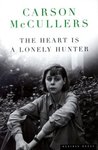
The Heart is a Lonely HunterThe Heart is a Lonely Hunter by Carson McCullers
My rating: 3 of 5 stars

It's hard to pin a rating onto this book. It shines as a portrayal of the ways that people subtly and unwittingly mirror one another. It ruthlessly reveals the consequences of seeking connection without offering empathy. Its words are plain but haunting. And again and again, it shows how perspectives and lives can change in an unexpected, irreversible instant.

And yet, I have to admit that I would sometimes find myself bored, especially in the first third of the book. Somehow, the rhythm of description and introspection didn't consistently engage me.

I'm certainly glad I read this book and would recommend it to almost anyone. The enduring relevance of its themes is chilling. I just wish I could have become more engrossed in it.

View all my reviews

Friday, March 27, 2015

If it's not going to be fired, don't put it there.

Five Great Short Stories (Dover Thrift Editions)Five Great Short Stories by Anton Chekhov
My rating: 4 of 5 stars

It's rare to find a book that can give either a lot of delight or none at all, depending on how carefully it is read. On the surface, these stories seem dreary, marked by unwarranted cruelty, untreated disease, and unrewarded hardship. But dig a little deeper, and it's as though Chekhov is inviting the reader to act as a detective, challenging them to pick up on the trails of clues that he's placed just out of sight. The ordering of sentences can allude to a character's affections before anything is expressed openly; a choice of beverage predicts an attitude revealed a page later; a sequence of shorter and shorter clauses parallels a person's life dwindling away and nearing the end. Little details like these became a source of scrutiny and excitement as I tried to anticipate where each story would go.

In creation of characters, Chekhov is observant and empathetic, giving each of them gestures and mannerisms that mean something. For the most part, the characters seem to be ignorantly bumbling through life, but we glimpse their hearts and minds in ways that make them mirrors of ourselves - sometimes painfully so. Additionally, irony leaps out when we may least expect it. Following one character's passionate speech on the necessity of doing good no matter what our position in life, his host's sleepy thought process is described:

He did not trouble to think whether what Ivan Ivanich had been saying was clever or right; his guests were talking of neither groats, nor hay, nor tar, but of something which had no bearing on his life, and he liked it, and wanted it to go on...

Most of the stories end with the characters continuing to bumble along - and despite (or because of) all their shortcomings and oddities, I found myself hoping that they'd manage to keep going and find peace or happiness or knowledge somehow, after their pages had run out. It took me longer to read this book than its 94 pages would seem to warrant. But reading it slowly and carefully was worthwhile for how it's changed my way of looking at stories - and maybe, even at people.

View all my reviews