Showing posts with label literary fiction. Show all posts

Friday, November 6, 2015

If you don’t say what you’re thinking, you end up lying when you really need to speak up.

The LakeThe Lake by Banana Yoshimoto
My rating: 4 of 5 stars

This story is narrated by Chihiro, who is more concerned with external events than with the machinations of her own mind. Through what she does and doesn't tell us, her inner paradoxes are revealed. She places the highest value on the timelessness of her art, but says that she doesn't paint for the future. She acknowledges her ignorance about trauma as energetically as she clings to it. Her tone is casual, self-protective, and carefree in a way that requires a great deal of thought. Just because people are playing doesn't mean their hearts aren't in it.

Nakajima operates from a compartment deep within himself, a shelter from society and memory. He "meets" Chihiro as they gaze out from their respective apartment windows. They inch closer together as months pass, a process that we witness in snapshots of the everyday: taking naps, drinking coffee, painting nails. But something hangs in the background, silent. When you compare your anticipated recovery time to the remainder of your life expectancy and can't tell which is longer, you're in a position that nobody is looking to hear about. I don't want to be part of the loneliness that these not-normal people exude.

The titular body of water is a scene of Nakajima's childhood, but it's more than that. Chihiro likens their time together to the feeling of being underwater. The end of a person's life evokes the smell of water. The story is concerned with ends achievable through water: cleansing or drowning or both. Or freezing over: forming a shell for others to skitter across, featureless and unpredictable.

View all my reviews

Sunday, October 4, 2015

There might still be nothing between them but loyalty and love and mutual incomprehension.

Gilead (Gilead, #1)Gilead by Marilynne Robinson
My rating: 5 of 5 stars

One of those rare books that I read extra slowly because I wanted it to last - a massive exercise in self-control.

Our narrator, John Ames, is a minister who knows he won't live to see his young son grow up. To do what he can to make up for that, he pens a long document to his son's future self. I could say that this book is simply about Ames reflecting on life, but reflection is never a simple process. Time lays out our life in a straight line, but memory rearranges it into a spider's web. Day-to-day events send reverberations into youth and middle age, childhood and legend.

Ames's words float up into a wide-open cosmos that inspires rapid exploration, but that also invites careful contemplation of the unspoken paths that brought each glowing thought out of the darkness. In its unassuming way, Gilead was gripping. It furnished me with a place of comfort without complacency, a place that I didn't want to leave.

It's a diary, a letter, and a sermon - a history of a world and a discourse on how to love it. But the how remains very much a question. Ames's introspection is interrupted (or accelerated) by the return of his best friend's miscreant son: Jack Boughton. At first, Ames is reluctant to reveal to the reader what Jack had done to earn so much distrust from a man who seems otherwise generous and forgiving. Ames is aware of his own fallible perspective. But as Jack grows closer to Ames's family, Ames takes a long look at the younger man's past and circles ever closer into his own blind spot.

Pivotal moments in characters' lives take place during sermons, which we watch from the viewpoints of both the preacher and the audience - and although the implication is that one is a messenger and the other is a receiver, the relationship is revealed to be far more complicated. We see how a single, silent audience member can occupy the speaker's thoughts more deeply than the speaker is occupying the thoughts of listeners. The reversal extends far beyond Sunday mornings, with several characters literally delivering sermons to Ames in the form of physical, written documents - documents that he himself composed years before, but that he now questions the truth of. More generally, a character whose help or blessing is sought often becomes a recipient of a new way of seeing the world.

In every important way we are secrets from each other, and I do believe that there is a separate language in each of us, also a separate aesthetics and jurisprudence. Every single one of us is a little civilization built on the ruins of any number of preceding civilizations, but with our own variant notions of what is beautiful and what is acceptable - which, I hasten to add, we generally do not satisfy and by which we struggle to live.

It is this acceptance of the mysterious, and the abundance of questions, that makes this book sincere and wondering rather than preachy.

View all my reviews

Tuesday, September 15, 2015

A lion who thinks his mane is all. A she-lion who does not.

A MercyA Mercy by Toni Morrison
My rating: 4 of 5 stars

I have always liked stories about makeshift families because they show that even if you're not born among like-minded people, you can still go out into the world and find them. This book is about a group of people who are almost a family, but not quite. From the gap between what they are and what they could be grows the tragedy of what they become.

They inhabit an isolated farm in 17th century America. There's Rebekka, who was shipped across the Atlantic to marry Jacob, whom she'd never met but grows to love. Jacob is a man whose good intentions jostle beside his materialistic ambitions. There are also three women who were acquired, in various ways. Sorrow is a cryptic castaway. Lina is a Native American whose tribe died. She now watches the world carefully, through a lens formed by memories of her childhood and experiences of an adolescence controlled by Europeans. And Florens is a girl that Jacob reluctantly accepted as payment for a debt owed by a slave-owner. Deprived of her mother from a young age, Florens's highest desire to be loved. When Jacob and Rebekka fall ill from smallpox, it's Florens who is sent to find help.

The atmosphere of America when it was "new" and untamed is portrayed in a way that transported me into this country's past self: familiar plants and animals and weather are evoked in ways that make them beautifully alien.

Morrison puts words to feelings that seem as ineffable as they are universal. Rebekka being ambushed by loneliness is an image that continues to haunt me:

Then as she stood in molten sunlight, pulling the corners of her apron together, the comfortable sounds of the farm would drop. Silence would fall like snow floating around her head and shoulders, spreading outward to wind-driven yet quiet leaves, dangling cowbells, the whack of Lina's axe chopping firewood nearby. Her skin would flush, then chill. Sound would return eventually, but the loneliness might remain for days.

The power of the language has as much to do with the choice of words as the way the words are connected into melodies that defy expectations of what a sentence should be. When Florens contrasts how she was treated most of her life with how she feels around a certain person, her statements tumble down over and over...

No one steals my warmth and shoes because I am small. No one handles my backside. No one whinnies like sheep or goat because I drop in fear and weakness. No one screams at the sight of me. No one watches my body for how it is unseemly.

...and then clamber upward to a plateau that reflects the weightless expansiveness of her need for love:

With you my body is pleasure is safe is belonging. I can never not have you have me.

Florens's quest unfolds alongside the stories of the other characters, each of which is narrated in a distinctive style. From these stories emerges a picture of how prejudice and servitude, in many forms, can feed off each other. At the same time, people occasionally glimpse something divine in another person's act of mercy. But somehow, these glimpses never last long enough to break the cycle.

View all my reviews

Monday, September 7, 2015

Grief's an amputation, but hope's incurable haemophilia: you bleed and bleed and bleed.

Slade HouseSlade House by David Mitchell
My rating: 4 of 5 stars

Slade House is David Mitchell daring you to get bored.

Structured as a set of stories about people visiting Slade House - a mansion whose existence seems to defy the laws of physics - the same rhythm echoes through each of the tales. The first chapter is about an autistic boy, Nathan Bishop, who visits the house with his divorced pianist mother in 1979. While she's inside displaying her talents to world-famous musicians, Nathan is outside in the garden getting his long-awaited first taste of friendship. However, what is his new companion really after?

Fast forward a few years and recast those themes into a different person's life: longing meets fulfillment in a whirl of emotion too intense for anything amiss to be noticed until it's (almost) too late. Fast forward again. Repeat. With every repetition, the similarities are striking, but so are the differences in the ways that the characters perceive Slade House. You come to expect certain things to happen again, but there's surprise in noticing just which details do and don't reappear, and in finding that the stories are more connected than you might at first expect. As a result, even though you might be pretty sure you know how things are going to turn out, you can't help but get pulled to the idea that this is the chapter where the cumulative force of the past is going to catalyze a turnaround. It creates suspense and momentum where there could otherwise be choppiness and predictability.

It also makes it possible to care about the characters. When you know what's going to happen to someone, it's easy to become detached. When you think you know but aren't sure, you're drawn towards hope like a moth towards fire (a recurring image in the novel, for good reason). And it's a wonderfully diverse group of characters that we have here, and I loved how we learn about their lives through understated little details instead of lengthy spelled-out histories.

I'm giving it four stars instead of five for a couple of reasons: 1) most of it reads like a standalone that doesn't rely on knowledge of The Bone Clocks, but it ultimately doesn't quite achieve that; 2) there's a cliche scene of a villain telling a victim all about their nefarious plan for no remotely logical reason; and 3) there's a strange obsession with one character's weight, to the point that it's the first thing that appears in any character's mind when they think of her. Really?

Aside from those issues, I found this book to be creepy and saddening and thrilling - another example of how skillfully David Mitchell can bridge multiple voices and sub-stories into a cohesive whole. Any time I had to put it down, I did so reluctantly and couldn't wait to pick it back up.

View all my reviews

Wednesday, July 22, 2015

If the generous ideas of youth are too often overclouded by the sordid views of after-life, that scarcely proves them to be false.

The Tenant of Wildfell Hall (Modern Library)The Tenant of Wildfell Hall by Anne Brontë
My rating: 4 of 5 stars

I've always been curious about Anne Brontë.


[Credit: Hark, a Vagrant!]

I was uncontainably exasperated with Wuthering Heights when I read it for a high school English class. A few years later, I was pleasantly surprised by Jane Eyre, although it's one of those rare cases where an adaptation stayed with me in a way that the book never quite could. I might be unintentionally reading these books in the order in which they appeal to me, or maybe my ability to appreciate the Brontës is growing with time. Either way, The Tenant of Wildfell Hall is something special.

The eponymous tenant is Helen Graham - reclusive, opinionated, independent - whose arrival at Wildfell Hall ignites the curiosity of her country neighbors. Her reluctance to socialize and her silence about her past open the door to rumors that everyone seems happy to spread, except for one young farmer: Gilbert Markham, the narrator of the first part of the novel. Gilbert befriends Helen and his feelings soon grow beyond friendship, but Helen rebuffs him. She finally offers an explanation for why, in the form of a diary that describes the events of the previous several years: her marriage to the seemingly charming Arthur Huntingdon, her torments as he reveals himself to be an alcoholic and a philanderer, and the decisions that finally brought her to Wildfell Hall.

In many ways, this book is about absence. The relationships among characters are defined by what they do in each other's absence as much as by what they do when they're together. Huntingdon abandons Helen for long periods of time to pursue his lifestyle unhindered. Early in their married life, these absences pain Helen, but they eventually became a desperately needed relief for her. Helen's separations from Gilbert take on a different meaning again: tests of faith.

I found Gilbert's 100-page introductory narration to be boring - brooding walks and gossipy tea parties got old quickly, and he never quite manages to become a distinctive or memorable character. But once Helen's voice takes over, the story gains a sense of urgency; we know (or think we know) where the story in the diary is going to end, but the young woman we see at the start of the diary lives a life vastly different from the slightly older one we've met at Wildfell Hall. We watch as the glowing veneer of young love begins to crack and crumble, leaving Helen in a net of entrapment and abuse that creates a similar sick feeling as the dystopian horrors of The Handmaid's Tale. Her ability to see Huntingdon for what he is, her determination to not be a victim of circumstances and past mistakes, and her perseverance in rebuilding a life for herself form a powerful statement. It's as relevant and important today as it's ever been.

‘This rose is not so fragrant as a summer flower, but it has stood through hardships none of them could bear: the cold rain of winter has sufficed to nourish it, and its faint sun to warm it; the bleak winds have not blanched it, or broken its stem, and the keen frost has not blighted it... It is still fresh and blooming as a flower can be, with the cold snow even now on its petals.— Will you have it?’

View all my reviews

Saturday, June 13, 2015

young and abstract, and consequently cruel

Crime and PunishmentCrime and Punishment by Fyodor Dostoyevsky
My rating: 4 of 5 stars

The first time I picked up this book, I got about 50 pages in before giving up. I put it away in the corner of a shelf, where it collected dust for years. But unlike most books that I chose not to finish, I knew that one day I was going to come back. Because I didn't stop reading because I was bored. I stopped because I was the opposite of bored. The book's zig-zagging torrents of thoughts and feelings were so dismaying but so relatable so that I was having Raskolnikov's thoughts before he had them himself. And given where those thoughts were leading him - which you can guess from the title - it wasn't a particularly comfortable position to be in.

The crime part of the book is brief and inevitable. A murder is planned and committed, and the murderer escapes. The punishment is long and unpredictable, but it's not a punishment from an external authority: it's the torture that the murderer, Raskolnikov, puts himself through. Acquaintances' innocuous comments transform into veiled treats that torment him. He's torn between protecting and pushing away his family. He constructs precarious justifications for himself that threaten to collapse on him at any moment.

But as these things happen, there are moments when his empathy and generosity shine through - and you want things to somehow not end terribly. Because really, even though we're not murderers, we've also done things we shouldn't have, and have had to struggle with what to do after.

Svidrigailov, a philanderer that Raskolnikov crosses paths with, finds that being honest about his poor deeds gives him some measure of peace in his life. But Raskolnikov finds that honesty about one's wrongdoing is only half of the equation, if the wounds inflicted on himself and others are to have any chance of healing. Honesty only opens the door to the pain of self-examination and slow process of atonement and, most of all, reconnection. As Lazarus - whose story is mentioned several times - was resurrected in part because his sisters believed it was possible, Raskolnikov's recovery depends on whether he is able to accept the love of the people who believe there is still good in him. It can be hard to guess how far he - or anyone - is willing to go.

View all my reviews

Thursday, April 30, 2015

The whole world was this symphony, and there was not enough of her to listen.

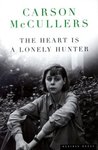
The Heart is a Lonely HunterThe Heart is a Lonely Hunter by Carson McCullers
My rating: 3 of 5 stars

It's hard to pin a rating onto this book. It shines as a portrayal of the ways that people subtly and unwittingly mirror one another. It ruthlessly reveals the consequences of seeking connection without offering empathy. Its words are plain but haunting. And again and again, it shows how perspectives and lives can change in an unexpected, irreversible instant.

And yet, I have to admit that I would sometimes find myself bored, especially in the first third of the book. Somehow, the rhythm of description and introspection didn't consistently engage me.

I'm certainly glad I read this book and would recommend it to almost anyone. The enduring relevance of its themes is chilling. I just wish I could have become more engrossed in it.

View all my reviews

Thursday, April 2, 2015

It is what happens when you sit back and do nothing about tyranny.

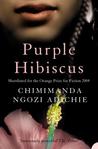
Purple HibiscusPurple Hibiscus by Chimamanda Ngozi Adichie
My rating: 4 of 5 stars

These days, it's easy to find books that feature young protagonists navigating all the areas of life that one might expect: parents, friendships, dating, school. What's more difficult is to find a book that conveys precisely how it feels to be afloat in the microcosm of childhood: the mysteriousness of adults, the need for connection, the attraction of the untrodden path. The magical thing about these books is that no matter where the characters are and what they're doing - busking on a Vancouver street corner or fighting monsters on the English countryside - the familiarity of their thoughts and emotions leads us back to the parts of childhood that never really leave us.

Purple Hibiscus is one of these books. It follows the lives of Kambili and her brother Jaja as they have their first experiences away from the household of their father, a man whose religious convictions and uncompromising personality drive him to champion the interests of his community, but to ruthlessly punish his family when he believes they've done wrong. Kambili and Jaja spent their lives struggling away from his anger and towards his approval, living each day according to a schedule he set for them, but a visit to their aunt's home gives them a taste of a world without these restrictions - a world where where they must learn to make their own decisions, speak up, and allow themselves the possibilities of laughter and heartbreak.

Kambili is almost painfully relatable. Even when I found myself groaning at some of her actions, I was simultaneously thinking "Yup, been there." Every character is complex and layered with ambiguity. Their lives play out against a background of political upheaval, which unpredictably impinges upon them. The ending delivers one shock after another, forcing the reader the re-examine the assumptions they have made about multiple people's actions over the course of the entire story.

Another great thing about this book is how it immerses the reader in the Nigerian setting through vivid sensory details combined with the use of Igbo words that are not immediately defined, but whose meanings the reader can guess approximately. You'll learn something about life in Nigeria, almost without being consciously aware that you are learning.

However, the book has its flaws. The plot slowed down in the second half, and my enchantment with the style of writing began to wear off as little cliches began to pop up. When I put the book down, I wasn't itching to pick it up again the way I was during the first half. And this isn't quite a flaw, but some paragraphs may be difficult to take in for readers who are sensitive to depictions of brutality against defenseless people and animals.

It's a book that's both comforting and discomfiting. It challenges the reader to see the good and bad in every character, and to watch as the two opposites collide, blur, and explode.

View all my reviews

Friday, March 13, 2015

We lived in the gaps between the stories.

The Handmaid's TaleThe Handmaid's Tale by Margaret Atwood
My rating: 5 of 5 stars

When I picked up a copy of The Handmaid's Tale at the library, a small rectangle of yellow paper slid out from between its pages: a folded post-it note with the words "I love you mom and dad" in a child's scrawl, in blue pen, beside a drawing of a sun and a cloud. A token left behind (intentionally or unintentionally) by a previous borrower, it accumulated a strange weight as I made my way through the book and became acquainted with the world portrayed inside: a world where a mother would never be told that she is loved, and where paper, pen, and even the alphabet would be inaccessible for half the population.

The story takes place in a version of North America where widespread infertility led to a violent, extremist faction taking over the government and instituting systematic subjugation of women. Part of this subjugation took the form of assigning women to strict roles: ornaments, housekeepers, toys, or - for the few still capable - wombs. This last group were the handmaids, who always dressed in head-to-toe red, and who exchanged their real name for the name of the man they were assigned to. This story is told by Offred (Of Fred), who describes her experiences as a handmaid and, in parallel, reflects on her earlier life.

For a story with so much strife unfolding in the background, the tone is remarkably muted. Offred is not the outright rebel that one might hope to read about. Her early failure to question authority precedes her eventual (apparent) passivity as a handmaid. She doesn't know as much about events in the outside world as one might like, creating a feeling of being inside a quiet, delicate bubble.

The writing is simultaneously intricate and smooth. The words could flow by almost effortlessly, but I often forced myself to read more slowly so that I could appreciate the eloquence and the double (triple, quadruple...) meanings of what was written. Plus, it's not necessarily a book that I wanted to go through quickly - each page seemed to anticipate some new disturbing calamity. I normally dislike cliffhanger endings, but in this case I thought the ending worked perfectly and was very much in the spirit of the rest of the book. The epilog took things to an entirely new level.

As scary and suspenseful as the book can be, it is not so much a futuristic horror story as it is a merging of things women have experienced in various places, at various times in history, brought into a setting that is more likely to hit home for modern readers in the western world. Readers who, themselves, might not give much thought to the impositions and expectations that they are constantly surrounded by.

Don't let the bastards grind you down.

[Read Harder Challenge task: a science fiction novel.]

View all my reviews

Friday, January 30, 2015

And anybody at all can see it, but you can't.

Completed January 12th, 2015

Lila (Gilead, #3)Lila by Marilynne Robinson
My rating: 4 of 5 stars

I find that one of the best things fiction can do is to help me remember that other people - with all their different beliefs and backgrounds and aspirations - are as fully human as I am. Lila is about two people working towards that understanding. Lila spent most of her life roaming the midwestern US, sometimes alone and sometimes in the company of other itinerant workers. What she lacks in a conventional education she makes up for by being a sharp observer and a deep thinker. These traits permeate the narrative. Her eventual husband, John Ames, is a Calvinist minister who tries to enable Lila to have a happy existence in small-town Gilead, knowing that he may never succeed and that she may someday return to her earlier way of living.

They seem an unlikely match. Lila, at first, seems to have little use for the theological concepts that Ames has devoted his life to contemplating. Worse, she struggles to see where people like herself and those she grew up around - areligious, struggling to get by, and sometimes forced to do things they'd rather not - fit into a Christian worldview. But gradually, they come to understand each other and themselves better. Lila reads challenging portions of the Bible and asks serious questions, which Ames gives a great deal of thought to as he tries to learn more about her. Lila has a deeply-held mistrustfulness that developed during a lifetime of violence and abandonment. Ames treats her with patience and solicitousness, almost (but not quite) too afraid to look forward to a future together. They are two of the most distinctive characters that I have encountered recently, and their interactions give rise to insights that neither would be likely to absorb on their own.

“So joy can be joy and sorrow can be sorrow, with neither of them casting either light or shadow on the other.”

A flaw of the book is that it meanders a little too much at times. But, that's easy to put up with when the book as a whole isn't very long, with remarkable weight in its small size. It's rare to find a story that tackles the challenges of grace the way that this one does - amazed and questioning and filled with a need to pay it forward, free from either proselytization or cynicism.

[Read for the Read Harder Challenge: a romance]

View all my reviews

It means loving someone you don't know.

Completed January 4th, 2015

Interpreter of MaladiesInterpreter of Maladies by Jhumpa Lahiri
My rating: 4 of 5 stars

This collection of stories explores interactions between India and North America through multiple angles: Indian immigrants with American landlords, American children with Indian babysitters, Indian-American families as tourists in their parents' birthplace. Although it focuses on, and elegantly captures, the heritage of India, it touches on experiences that are universal to anyone who has found themselves trying to understand and survive in a new place.

From the first page of this book, I was struck by how Lahiri reveals the inner lives of her characters by describing their outward actions, appearances, and environments with just the perfect amount of detail - enough to bring them to life in the reader's imagination, but never so much as to encumber the storytelling. All the stories share a sense of nostalgia and bittersweetness, but each story also shows a different facet of how these emotions impact people's lives. Some characters are driven towards resignation and others towards perseverance, each in a subtly different way.

If I were to find a flaw in the book, it would be that a few of the stories wound up being a little too sentimental and predictable. But, the predictability of the plot wasn't too big a problem - I was drawn in and kept reading because I was fascinated by the mosaic formed by people's memories and desires.

Once or twice while reading this book, I inexplicably found tears in my eyes - not necessarily due to any particularly sad event in the story, but because these characters and their quiet, everyday trials felt so concrete and real, and because I can see these experiences mirrored in people in my own life.

[Read for the Read Harder Challenge: a collection of short stories]

View all my reviews